Skip to main content
Login
|
Register
Skip to content
Skip to main navigation
Southend-on-Sea Borough Council
Home
Consultations
Southend-on-Sea Streetscape Manual
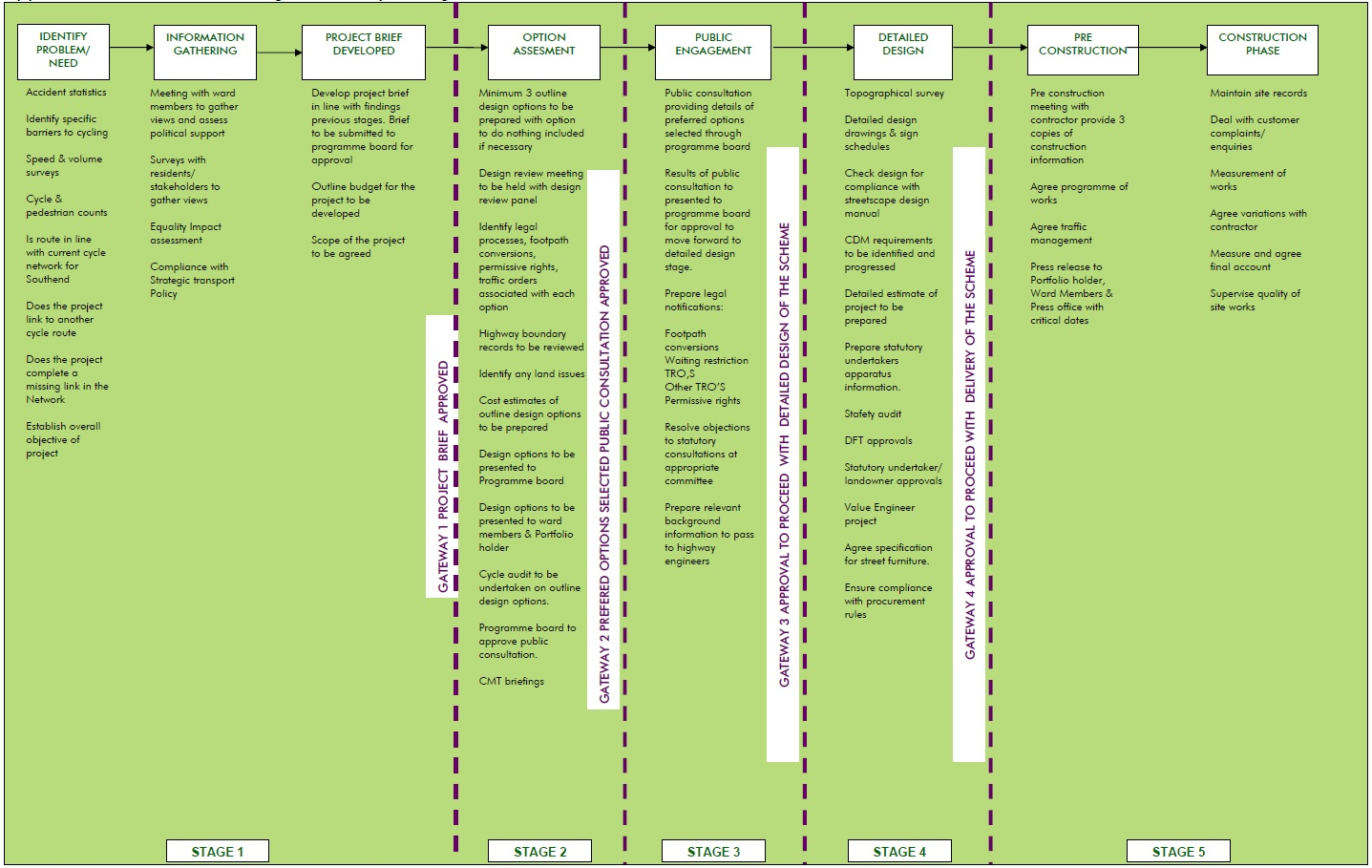
Appendix 1: 5 Stage 'Gateway' Design Process example
Southend-on-Sea Streetscape Manual
Ended on the 19th August 2013
The Southend-on-Sea Streetscape Manual - Introduction
1.
What is unique about Southend-on-Sea?
National Planning Policy Framework (NPPF)
Aspirations for the Borough - Local Planning Policy Context
The Streetscape Manual
Update and Review
Procurement Disclaimer
Part A: Design Strategy
Introduction
Why do we need a Streetscape Manual?
Assessment
Value for Money
Who is the manual for?
Defining the 'Public Realm'
Southend's Streetscape Objectives
Objective 1: Get The Basics Right - Applying the 'Remove, Relocate, Rethink' Principles to all New and Existing Schemes to Provide a Clutter-Free Environment.
Objective 2: Creating 'Better Streets' by making the Borough's Streets /Public Realm Safe & Accessible for all, Recognising Needs of Vulnerable Road Users, Encouraging Walking, Cycling & other Modes
Objective 3: Creating Sustainable, Easy to Manage and Cost Effective Streets by Employing a Simplified Palette of Materials
Objective 4: To Improve the Street Environment for Residents, Help to Attract Visitors to the Town, and Promote the Regeneration of the Central Area.
Objective 5: Enhance the Borough's Green Infrastructure
Where are the Borough's General and Key Character Areas?
Part B: Design Detail
Introduction
Section 1: Surfacing and Signage
1. Footways
Footways and Paving in Conservation Areas
Tactile Paving
Changes in Surface Materials
Kerbs
Allocation of Space on the Footway
Barriers, Guardrail + Crossings
Sub Base - Specification
Underground Services + Inspection Covers
Implementation (Edges + Bonding)
Footway Protection
SuDS and Drainage
Forecourts
'A' Boards
Product Specifications
Table 1: Footway Material Specification
2. Carriageways
Materials
Rethinking Traffic Calming
Creating 'Better Streets' and Addressing the Needs of Users
Home Zones
Parking Areas
Raised Tables and Buildouts
Road Humps and Speed Cushions
Road Markings and Signs
Traffic Calming in Conservation Areas
Permanent Vehicular Crossings (PVX's) and Dropped Kerbs
Access Ramps on the Highway
3. Cycleways
4. Signage and Wayfinding
Road Name Signposts
Pedestrian Signage and Wayfinding
VMS
Table 2: Signage and Wayfinding Specification
Section 2: Street Furniture
Historic Street Furniture
Replacement of Inappropriate Street Furniture
Anti Skateboard Measures
Reducing Signalling Clutter
CCTV
Public Art
5. Bus Stops and Shelters
Table 3: Bus Stops and Shelters Specification
6. Bollards and Guardrail
Table 4: Bollards + Guardrail Specification
7. Cycle Parking
'ParkThatBike' Scheme
Table 5: Cycle Parking Specification
8. Lighting
Highway Lighting
Decorative Lighting
Banner Columns
Reducing Energy Consumption
Table 6: Lighting + Banners Specification
9. Seating
Donated Seats
Table 7: Seating Specification
10. Bins
Dog Waste Bins
146.
Salt Bins
Table 8: Bins Specification
11. Tree Protection and Planting
Tree Planting Best Practice
Trees as Traffic Calming Measures
Donated Trees
Planters
Southend Town Centre - Business Improvement District
Sponsorship of Planters
Hanging Baskets
Roundabouts
167.
Table 9: Tree Protection Specification
Appendix 1: 5 Stage 'Gateway' Design Process example
Appendix 2: Materials and Street Furniture Update Form
Appendix 3: Useful Websites
Appendix 4: Bibliography
<< Previous Page
||
Next Page >>
Appendix One 5 Stage ‘Gateway’ Design Process
<< Previous Page
||
Next Page >>
For instructions on how to use the system and make comments, please see our
help guide
.
back to top
back to top